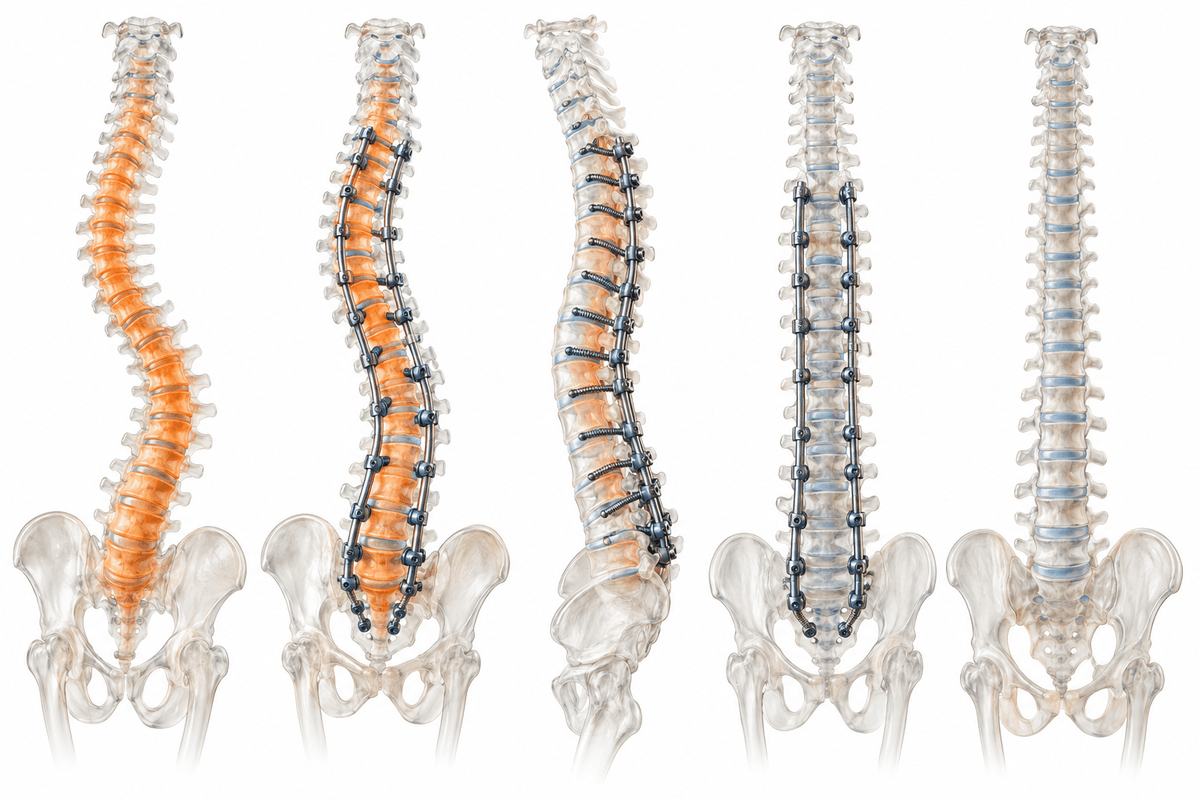
Performed by Dr. Surya Sri Krishna Gour
Deformity corrections are procedures designed to realign bones, joints, or the spine when they have become misshapen due to injury, disease, or developmental conditions. The goal is to restore normal anatomy, improve function, and address pain or neurological symptoms. Dr Surya Sri Krishna Gour evaluates each case individually to determine the appropriate surgical approach based on the type and severity of the deformity.
We believe in honest, upfront disclosure so you can make an informed decision.
A step-by-step look at what happens during this procedure.
General anaesthesia is administered and the patient is carefully positioned to allow access to the affected area of the spine or skeleton.
An incision is made and soft tissues are gently moved aside to expose the deformed bone or spinal segment.
The misaligned bones are realigned using specialised instruments. This may involve cutting bone, removing abnormal tissue, or releasing tight structures.
Metal rods, screws, plates, or cages are placed to hold the corrected position while the bone heals and fuses together.
The incision is closed in layers and the patient is moved to recovery where vital signs and neurological function are closely monitored.
A structured, patient-first approach from first consultation to full recovery.
Dr Surya Sri Krishna Gour reviews imaging studies and clinical findings to plan the exact correction needed and anticipate any anatomical challenges.
The deformity is corrected using careful measurement and alignment, with attention to protecting nerves and blood vessels throughout the procedure.
Neurological monitoring is used during surgery to track spinal cord and nerve function in real time, helping to minimise the risk of injury.
A rehabilitation plan is developed that includes pain management, physiotherapy, and follow-up imaging to ensure the correction is maintained and healing is progressing.
What to expect at each stage of your recovery journey.
The first few days involve hospital monitoring, pain management, and gentle movement with assistance. Patients are encouraged to sit and walk short distances with support to prevent complications.
Over the first six to twelve weeks, activity gradually increases under the guidance of physiotherapy. Bending, twisting, and heavy lifting are restricted to protect the surgical site while bone healing begins.
Full recovery may take several months as bone fusion matures and strength rebuilds. Follow-up visits and imaging help confirm that the correction is stable and that it is safe to resume more demanding activities. Individual recovery varies based on the extent of correction and overall health.
The procedure aims to restore a more normal shape to the spine or skeleton, which may improve appearance and balance.
Correcting the deformity may relieve pressure on nerves and reduce pain, numbness, or weakness. However, some pre-existing nerve damage may not fully reverse.
Many patients experience better movement and the ability to perform daily activities more comfortably, though the degree of improvement depends on the severity of the original deformity.
The surgery addresses structural problems but cannot undo all effects of long-standing deformity, such as muscle atrophy or chronic pain patterns that developed over time.
The right choice depends on your diagnosis, risks and circumstances — discussed with you at your consultation.
For mild or slowly progressing deformities, especially in younger patients, regular monitoring and the use of a brace may be recommended to prevent worsening without surgery.
Some deformities that are not severe or do not compress nerves can be managed with exercises, posture training, and medications to control symptoms without invasive intervention.
In certain cases, smaller procedures that address specific aspects of the deformity may be appropriate, or surgery may be performed in stages to reduce the burden on the patient. The choice depends on the individual diagnosis, the risks of each approach, and the patient's overall condition.
Let's clear up some of the most common myths about deformity corrections.
Get a personalised assessment from an experienced specialist. Understand your options, ask your questions, and decide with confidence.