Treated by Dr. Surya Sri Krishna Gour
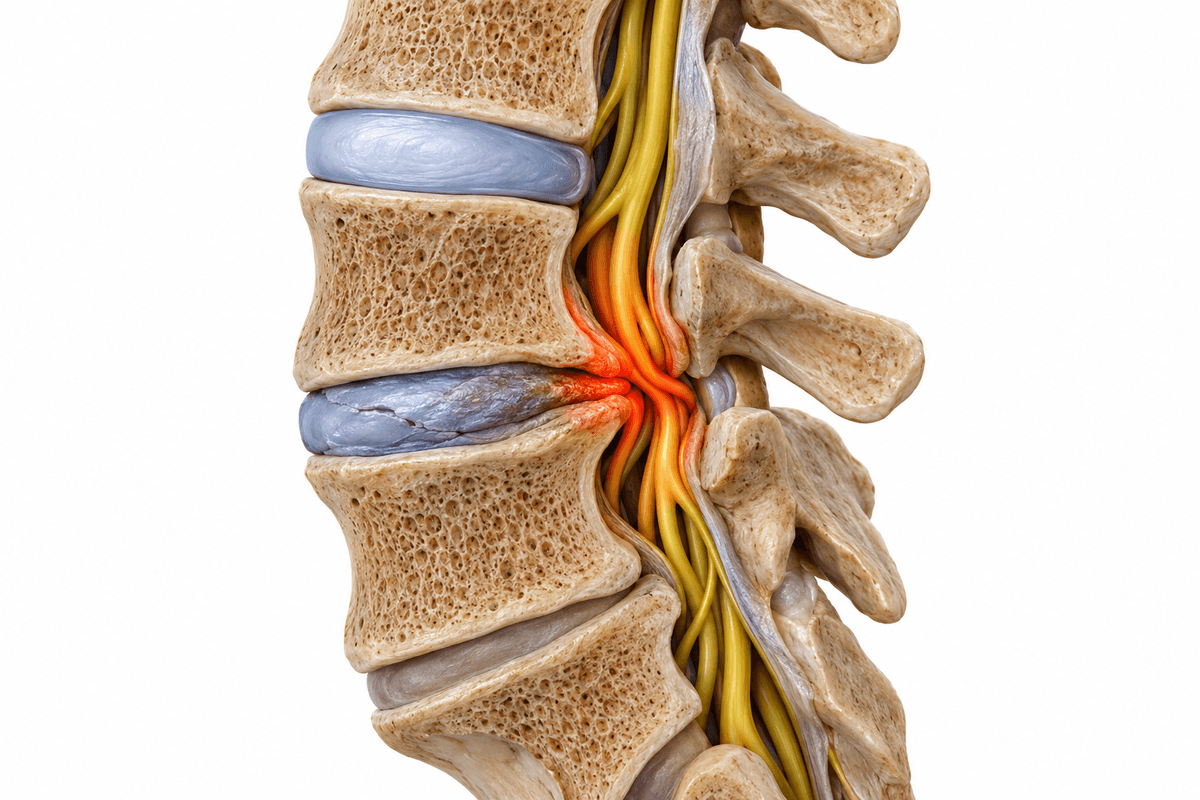
Lumbar canal stenosis occurs when the spinal canal in the lower back becomes narrower, putting pressure on the spinal cord and nerves. This narrowing typically develops over time as the spine ages, and can lead to pain, numbness, or weakness in the legs. Dr Surya Sri Krishna Gour evaluates each patient individually to determine the most appropriate approach to managing symptoms and improving mobility.
Narrowing of the main central spinal canal that houses the spinal cord and nerve roots.
Narrowing of the side channels where nerve roots exit the spinal canal on their way to the legs.
Narrowing of the openings through which individual nerve roots leave the spine to reach the limbs.
Multiple factors can contribute to the development and progression of this condition.
Recognising the signs early gives you more treatment options.
Assessment begins with a detailed clinical history and physical examination to understand symptoms and their impact on daily activities. Imaging studies help confirm the diagnosis and plan treatment, though not every patient requires all tests.
From conservative to surgical — we always start with the least invasive option first.
A structured, patient-first approach from first visit to full recovery.
Dr Surya Sri Krishna Gour conducts a thorough clinical examination and reviews imaging to understand the extent of canal narrowing and how it affects the nerves.
Treatment recommendations are tailored to each patient's symptoms, lifestyle needs, and overall health, starting with conservative options where appropriate.
When surgery is warranted, Dr Surya Sri Krishna Gour performs decompression procedures to relieve nerve pressure, using techniques suited to the individual anatomy and pathology.
Regular follow-up ensures that recovery is progressing as expected and allows adjustments to rehabilitation or management plans based on how symptoms respond.
What to expect at each phase of recovery.
For non-surgical treatment, patients gradually increase activity as symptoms allow. After surgery, initial recovery involves wound care and gentle mobilization, with timelines varying by individual.
Physiotherapy helps restore strength, flexibility, and function. Patients work on core stability and safe movement patterns. The duration and intensity depend on the treatment received and individual progress.
Maintaining spine health through regular exercise, posture awareness, and activity modifications helps manage symptoms over time. Some patients may need ongoing support to optimize function.
Many patients experience reduction in leg pain and improved walking ability with appropriate treatment, though the degree of improvement varies individually.
Treatment aims to help patients return to daily activities with greater comfort and less limitation, though some activity restrictions may remain.
Some numbness or discomfort may persist even after treatment, particularly if nerve compression was longstanding. Complete resolution of all symptoms cannot be guaranteed.
Ongoing self-care and activity modification are important, as stenosis reflects age-related changes that may progress in other areas of the spine over time.
Without treatment, lumbar canal stenosis may gradually worsen, leading to increasing difficulty with walking and daily activities. Progressive nerve compression can result in worsening leg weakness and numbness. In some cases, prolonged severe compression may lead to lasting nerve damage that becomes more difficult to reverse.
Seek medical evaluation if you develop leg pain, numbness, or weakness that interferes with walking or daily activities. Prompt assessment is important if you experience difficulty controlling your legs, problems with balance, or if symptoms progressively worsen despite rest. Early evaluation allows for timely intervention before significant nerve damage occurs.
Early treatment means more options and better outcomes. Book a consultation to understand your condition and explore the right path forward.