Performed by Dr. Surya Sri Krishna Gour
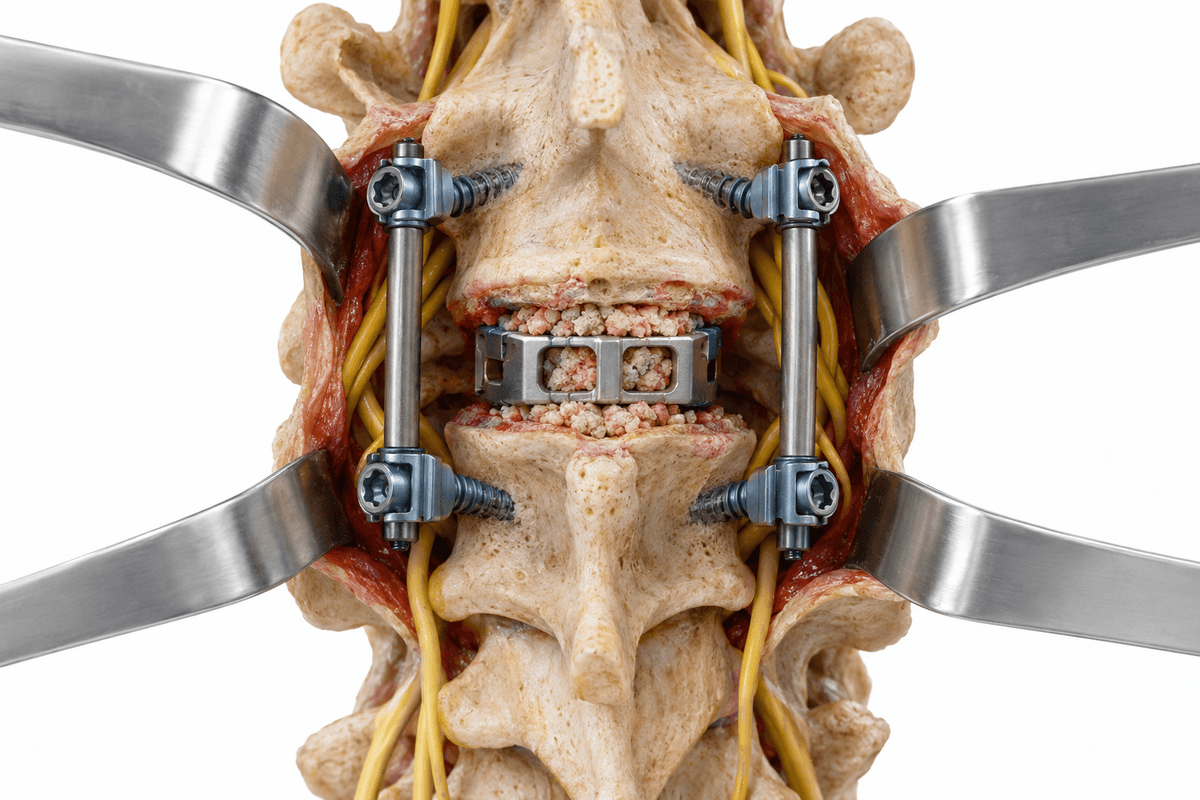
Spinal fusion is a surgery that joins two or more bones in your spine so they heal into a single, solid bone. It is performed when motion between vertebrae causes pain, instability or nerve compression. Dr Surya Sri Krishna Gour evaluates each patient individually to determine whether this procedure is appropriate for their condition.
We believe in honest, upfront disclosure so you can make an informed decision.
A step-by-step look at what happens during this procedure.
An incision is made in the back, side or front of the spine, depending on which vertebrae need fusion. Muscles and soft tissues are moved aside to reach the bone.
The damaged disc or abnormal tissue between the vertebrae is removed. The bone surfaces are prepared so they can grow together.
Bone graft material, taken from your own body or from a donor source, is placed between the vertebrae to encourage new bone growth.
Metal rods, screws, plates or cages are secured to the vertebrae to hold them in place while the bone graft heals.
The muscles and soft tissues are repositioned, and the incision is closed with sutures or staples. A dressing is applied.
A structured, patient-first approach from first consultation to full recovery.
Dr Surya Sri Krishna Gour reviews MRI, CT and X-ray studies to identify the exact levels of the spine that require fusion and to plan the surgical approach.
The approach—posterior, anterior or lateral—is chosen based on the location of the problem, the patient's anatomy and the need to access nerves or discs.
Nerve function is monitored throughout the procedure to help protect the spinal cord and nerve roots from injury.
Regular follow-up appointments with imaging are scheduled to monitor bone healing, hardware position and overall recovery progress.
What to expect at each stage of your recovery journey.
You will spend the first days in hospital with pain management, wound care and assistance getting out of bed. Walking short distances with support usually begins within the first two days.
For the first six weeks, avoid bending, twisting or lifting. Focus on gentle walking and daily activities within your comfort. Physical therapy may begin to guide safe movement and posture.
Over three to six months, bone graft gradually fuses the vertebrae together. Follow-up X-rays monitor progress. Gradual return to normal activities is guided by your clinical team and imaging findings.
The procedure aims to reduce pain caused by abnormal motion or instability in the spine. However, it does not guarantee complete pain relief, and some discomfort may persist.
Fusion creates a solid segment of bone, which can improve spinal stability and prevent further deformity. The fused segment will no longer move, which reduces flexibility in that part of the spine.
When combined with decompression, fusion may help relieve pressure on nerves and reduce symptoms like numbness or weakness. Recovery of nerve function varies and may be incomplete if damage was long-standing.
Fusing one part of the spine can increase stress on the vertebrae above and below the fusion, which may lead to degeneration in those areas over time.
The right choice depends on your diagnosis, risks and circumstances — discussed with you at your consultation.
Physical therapy, pain medications, activity modification and spinal injections may be tried first, especially when symptoms are mild or moderate and stability is not severely compromised.
Procedures like laminectomy or discectomy remove pressure from nerves without joining the bones. This option may be suitable when instability is not a major concern.
In selected cases of single-level disc disease in the cervical or lumbar spine, an artificial disc may preserve motion instead of fusing the segment. Suitability depends on anatomy, bone quality and the extent of degeneration.
Let's clear up some of the most common myths about spinal fusion.
Get a personalised assessment from an experienced specialist. Understand your options, ask your questions, and decide with confidence.