Performed by Dr. Surya Sri Krishna Gour
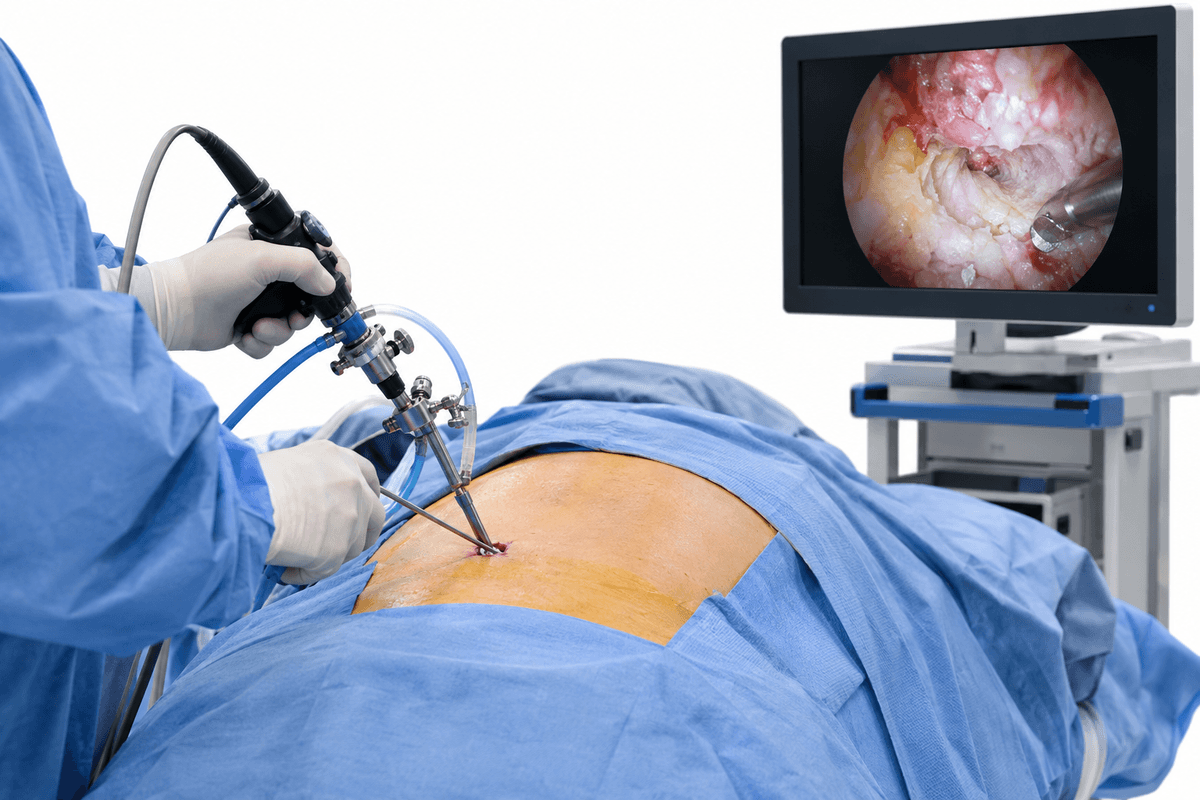
Endoscopic discectomy is a minimally invasive procedure that removes herniated disc material pressing on spinal nerves. Using a small tube with a camera and instruments, the surgeon accesses the affected disc through a tiny incision. Dr Surya Sri Krishna Gour performs this technique to relieve nerve compression while preserving surrounding tissues.
We believe in honest, upfront disclosure so you can make an informed decision.
A step-by-step look at what happens during this procedure.
You lie face down on the operating table. Anaesthesia is administered, either general to put you to sleep or local with sedation to numb the area.
A small incision, typically less than one centimetre, is made over the affected disc level using X-ray guidance to ensure accurate placement.
A thin tube with a camera and light at the tip is gently passed through the incision and guided to the herniated disc.
Using tiny instruments passed through the endoscope, the surgeon removes the herniated portion of the disc that is pressing on the nerve root.
Once the nerve is decompressed, the instruments are removed and the small incision is closed with a stitch or adhesive strip.
A structured, patient-first approach from first consultation to full recovery.
Dr Surya Sri Krishna Gour reviews imaging studies and clinical findings to confirm the disc level and assess whether endoscopic discectomy is appropriate for your condition.
Real-time X-ray guidance is used throughout to ensure the endoscope reaches the exact site of the herniated disc, minimising disruption to surrounding structures.
The herniated disc fragment compressing the nerve is carefully identified and removed under direct vision through the endoscope, aiming to relieve pressure and symptoms.
After the procedure, you are monitored in the recovery area for a few hours to ensure stable vital signs and comfort before discharge, with clear instructions for home care.
What to expect at each stage of your recovery journey.
In the first few days, rest is important. You may feel soreness at the incision site and some residual back or leg discomfort. Pain relief medication and gentle movement as advised help during this phase.
From the first week, gradual walking and light daily activities are encouraged. Heavy lifting, bending, and twisting are avoided. Physiotherapy may begin to rebuild strength and flexibility.
Over two to four weeks, most patients resume normal daily activities. Return to work and more strenuous tasks depends on individual healing and the nature of your occupation, as guided by your clinical team.
The procedure aims to reduce or eliminate leg or arm pain, numbness, and weakness caused by the herniated disc pressing on a nerve. The degree and speed of improvement vary among individuals.
Because the approach is minimally invasive, bone, muscle, and ligaments are largely preserved compared to traditional open surgery. This may contribute to quicker recovery in many cases.
Endoscopic discectomy targets nerve compression from a specific disc herniation. It may not resolve axial back pain unrelated to nerve compression, or pain from other spinal conditions such as arthritis or instability.
In some patients, disc material can herniate again at the same or a different level. Lifestyle factors, spinal mechanics, and individual healing influence this risk.
The right choice depends on your diagnosis, risks and circumstances — discussed with you at your consultation.
Physiotherapy, pain medication, and activity modification are often tried first. Many disc herniations improve without surgery over weeks to months. Surgery is considered when symptoms persist or worsen despite these measures.
A traditional surgical approach using a larger incision and microscope to remove the herniated disc. It may be preferred for certain disc locations, larger herniations, or when endoscopic access is not feasible.
Injections around the spinal nerves can reduce inflammation and pain temporarily. They may provide relief for some patients, though they do not remove the herniated disc material.
Let's clear up some of the most common myths about endoscopic discectomy.
Get a personalised assessment from an experienced specialist. Understand your options, ask your questions, and decide with confidence.