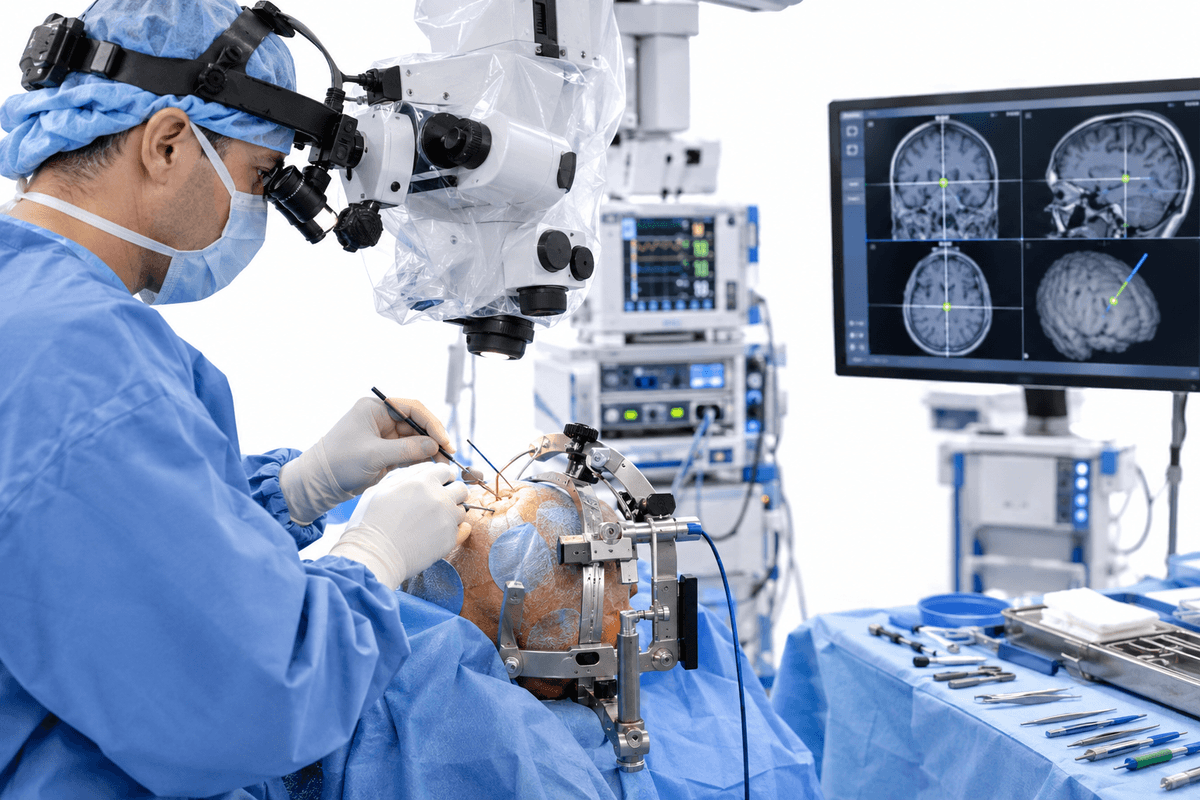
Performed by Dr. Surya Sri Krishna Gour
Functional neurosurgery is a branch of neurosurgery that treats disorders affecting how the nervous system works, such as movement problems, chronic pain, and epilepsy. Rather than removing tumours or structural abnormalities, these procedures aim to modify or modulate nervous system activity. Dr Surya Sri Krishna Gour evaluates each patient's condition to determine whether functional neurosurgery is appropriate.
We believe in honest, upfront disclosure so you can make an informed decision.
A step-by-step look at what happens during this procedure.
The neurosurgeon reviews your medical history, symptoms, and imaging studies to confirm that functional neurosurgery is suitable for your condition.
Detailed brain imaging helps identify the precise target area within the nervous system that needs modification or stimulation.
Under general anaesthesia, a small opening is made in the skull or a minimally invasive approach is used to reach the target area.
Depending on the condition, the surgeon may implant electrodes for deep brain stimulation, create precise lesions, or resect the area causing seizures.
The incision is closed and you are monitored in recovery before being transferred to the ward for observation.
A structured, patient-first approach from first consultation to full recovery.
Dr Surya Sri Krishna Gour reviews all diagnostic tests and discusses the goals, risks, and expected outcomes with you and your family.
Advanced imaging and navigation tools are used to target the exact area of the nervous system involved in your symptoms.
You are closely observed for neurological function, pain control, and any signs of complications in the immediate recovery period.
If devices such as stimulators are implanted, settings are adjusted during follow-up visits to optimise symptom control.
What to expect at each stage of your recovery journey.
You will spend several days in hospital for monitoring. Pain and discomfort are managed with medication, and early mobility is encouraged. Individual recovery times vary.
Rest is important during the first few weeks. You may experience fatigue or mild headaches. Avoid strenuous activities and follow all wound care instructions provided by your clinical team.
Gradual return to daily activities occurs over several weeks. If a stimulator was implanted, adjustments to settings may continue for months to achieve good symptom control. Follow individual instructions from your doctor.
Functional neurosurgery may help reduce tremors, rigidity, chronic pain, or seizure frequency. The degree of improvement varies, and some symptoms may persist.
Many patients can reduce medication doses after surgery, though most still require some ongoing medication. Complete elimination of medication is not guaranteed.
Improved control of symptoms can enhance daily functioning and independence. Results depend on the underlying condition, its severity, and individual response to treatment.
Functional neurosurgery addresses specific symptoms but does not cure the underlying disease. Progressive conditions may continue to advance, and additional treatments may be needed over time.
The right choice depends on your diagnosis, risks and circumstances — discussed with you at your consultation.
Many movement disorders, epilepsy, and chronic pain conditions are initially managed with medications. Surgery is typically considered when medications are insufficient or cause significant side effects.
Rehabilitation therapies can help manage symptoms, improve mobility, and enhance daily function. They are often used alongside or instead of surgery depending on the severity of the condition.
Techniques such as transcranial magnetic stimulation may be considered for certain conditions. The choice depends on diagnosis, response to prior treatments, and individual circumstances.
Let's clear up some of the most common myths about functional neurosurgery.
Get a personalised assessment from an experienced specialist. Understand your options, ask your questions, and decide with confidence.