Performed by Dr. Surya Sri Krishna Gour
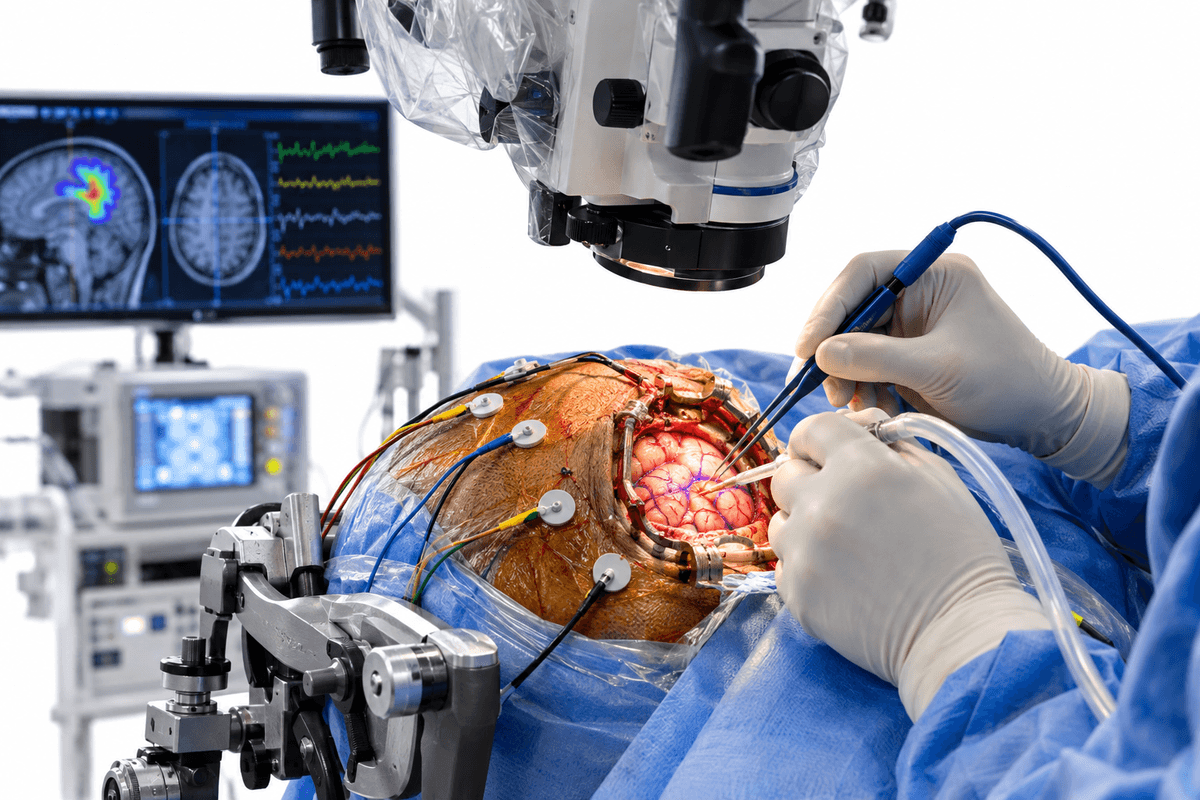
Motor and Speech Surgery is a neurosurgical procedure that targets specific areas of the brain responsible for movement and language. It may be considered for conditions where abnormal brain activity or structural issues affect a person's ability to move or communicate clearly. Dr Surya Sri Krishna Gour evaluates each case individually to determine if this approach is suitable.
We believe in honest, upfront disclosure so you can make an informed decision.
A step-by-step look at what happens during this procedure.
Detailed imaging and sometimes awake testing identify the exact brain regions responsible for movement and speech, as well as the area causing symptoms.
The patient is placed under general anaesthesia and positioned so the neurosurgeon can access the target area of the brain safely.
A section of the skull is temporarily removed to expose the brain surface where the problem is located.
Throughout the procedure, the surgical team monitors brain activity and may test motor or speech function to protect healthy tissue.
Once the target tissue is addressed, the skull section is replaced and secured, and the patient is moved to a recovery area for close observation.
A structured, patient-first approach from first consultation to full recovery.
Dr Surya Sri Krishna Gour reviews imaging, neurological testing, and functional mapping results to plan the safest surgical approach for each patient.
The exact location, size, and relationship to critical brain areas are mapped before surgery to minimise risk to motor and speech function.
During the procedure, continuous monitoring and testing help guide decisions and protect areas essential for movement and language.
After surgery, the team provides close monitoring, pain management, and rehabilitation guidance tailored to the individual's recovery needs.
What to expect at each stage of your recovery journey.
The first few days involve close monitoring in hospital, pain management, and gradual mobilisation. Some patients experience temporary weakness or speech difficulty that improves with time.
Over the first 2-4 weeks, most people regain energy and begin outpatient rehabilitation if needed. Activities are gradually increased based on individual progress and medical advice.
Physical therapy, occupational therapy, or speech therapy may continue for several weeks to months, depending on the extent of surgery and the person's baseline function. Recovery timelines vary widely.
The procedure aims to reduce seizures, remove abnormal tissue, or restore blood flow, depending on the underlying condition. Not all symptoms resolve completely, and some may persist or change.
A key goal is to protect motor and speech abilities during surgery. Despite careful planning, some patients may experience new or temporary changes in movement or language.
Surgery does not always eliminate the need for medication or other treatments. Long-term follow-up and rehabilitation are often part of the overall care plan.
Each person's recovery depends on the location and extent of surgery, their age, general health, and the underlying condition. Outcomes cannot be predicted with certainty.
The right choice depends on your diagnosis, risks and circumstances — discussed with you at your consultation.
For epilepsy or other conditions, medications may control symptoms without surgery. This is usually the first approach, and surgery is considered when medications are insufficient or poorly tolerated.
In some cases, focused radiation can treat small tumours or vascular malformations without opening the skull. It is considered based on size, location, and the risks of open surgery.
For certain conditions with mild symptoms, watchful waiting combined with speech or physical therapy may be appropriate. The decision depends on how symptoms affect daily life and the risks of intervention.
Let's clear up some of the most common myths about motor and speech surgery.
Get a personalised assessment from an experienced specialist. Understand your options, ask your questions, and decide with confidence.