Performed by Dr. Surya Sri Krishna Gour
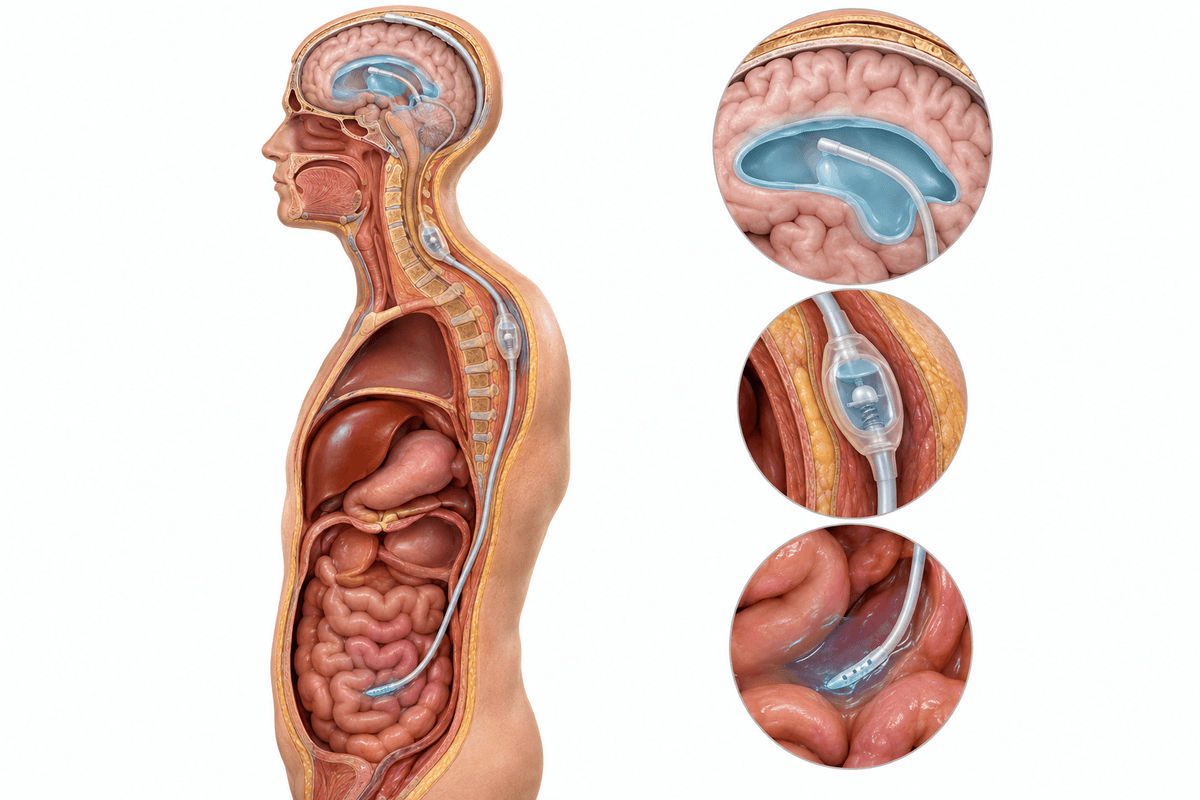
A shunt for hydrocephalus is a surgical procedure that places a thin tube to drain excess cerebrospinal fluid (CSF) from the brain to another part of the body, usually the abdomen. This helps relieve the pressure that builds up when fluid cannot drain naturally. The procedure is performed under general anaesthesia and typically requires a hospital stay for monitoring and recovery.
We believe in honest, upfront disclosure so you can make an informed decision.
A step-by-step look at what happens during this procedure.
General anaesthesia is given so the patient is asleep and pain-free throughout the procedure.
A small opening is made in the skull, and a thin catheter is carefully inserted into a brain ventricle where fluid collects.
A valve is positioned under the scalp to regulate the flow of cerebrospinal fluid and prevent over-drainage.
A long, flexible tube is passed under the skin from the head down the neck and chest to the abdomen or, less commonly, the heart chamber.
The end of the tube is placed into the peritoneal cavity (abdomen) or another drainage site, where the fluid is absorbed naturally by the body.
A structured, patient-first approach from first consultation to full recovery.
Dr Surya Sri Krishna Gour reviews imaging studies and assesses ventricle anatomy to plan the safest catheter route and shunt type.
The ventricular catheter is positioned using anatomical landmarks and, when needed, imaging guidance to ensure accurate placement.
The valve mechanism is chosen based on the patient's drainage needs, with settings that can be adjusted externally if required after surgery.
After surgery, the patient is monitored for shunt function, neurological status, wound healing, and any signs of infection or complication.
What to expect at each stage of your recovery journey.
The first few days involve close monitoring for headache relief, shunt function, and any signs of infection. Pain is managed with medication, and gentle movement is encouraged.
After discharge, activity is gradually increased while avoiding heavy lifting and straining. Incision sites need to be kept clean and dry. Symptoms such as persistent headache, fever, or changes in alertness should be reported immediately.
Most people return to normal activities within four to six weeks. The shunt is a permanent device and requires lifelong monitoring for proper function, with regular follow-up visits to check for complications or need for revision.
The shunt aims to reduce symptoms caused by fluid buildup, such as headache, nausea, vision problems, or gait disturbance, by continuously draining excess cerebrospinal fluid.
Many patients experience stabilisation or improvement in cognitive function, coordination, and mobility when pressure on the brain is relieved. The degree of improvement varies depending on how long symptoms were present and underlying brain conditions.
The shunt manages hydrocephalus but does not address the root cause. The device remains in place for life, and some patients may need one or more revision surgeries if the shunt blocks, becomes infected, or needs adjustment.
Shunts require regular follow-up and imaging to ensure they are functioning properly. Patients and families need to be aware of warning signs of shunt failure or infection and seek prompt medical attention when they occur.
The right choice depends on your diagnosis, risks and circumstances — discussed with you at your consultation.
A minimally invasive procedure that creates a new drainage pathway within the brain itself, avoiding the need for a shunt. It may be suitable for certain types of hydrocephalus, particularly obstructive hydrocephalus, and is considered based on age, anatomy, and the cause of fluid buildup.
In mild or stable cases, particularly in adults with normal pressure hydrocephalus, careful monitoring and medications to reduce fluid production may be tried before surgery. The choice depends on symptom severity, rate of progression, and risks versus benefits in the individual case.
Let's clear up some of the most common myths about shunt for hydrocephalus.
Get a personalised assessment from an experienced specialist. Understand your options, ask your questions, and decide with confidence.